
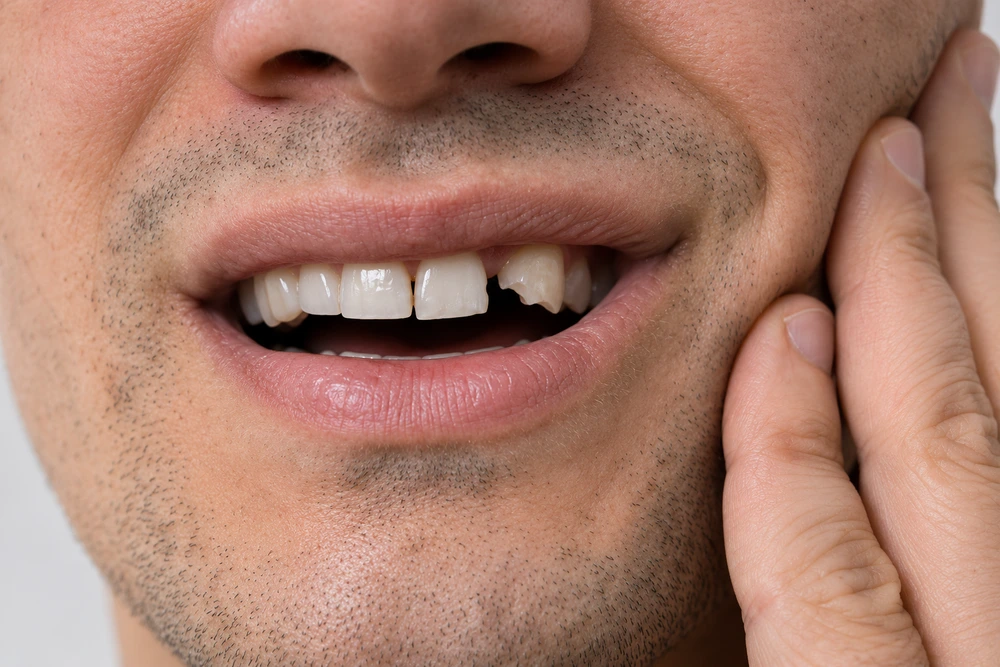

Knowing what to do if you break a tooth matters, even without pain. You might notice a rough edge while eating lunch. Or a small piece might chip off during brushing. You may assume that no pain means no problem. That's a common belief. It's also an unreliable way to judge the damage.
At Jupiter Advanced Dentistry, we encourage you to call about any broken tooth. Some chips involve only the outer enamel. Other breaks reach deeper or weaken the remaining tooth. You can't always tell the difference at home. A tooth may look mostly intact and still need care.
The next step doesn't have to feel confusing. We'll explain what needs prompt attention and what you can do while waiting. Pain isn't the whole story.
Why Doesn't Every Broken Tooth Hurt?
Enamel forms your tooth's hard outer layer. It has no nerves. A shallow chip may leave a sharp edge without causing pain. That helps explain why people sometimes dismiss these injuries.
But comfort doesn't prove that a tooth is healthy. A crack can spread under chewing pressure. A break can also expose the softer layer beneath enamel. That layer offers less protection against bacteria and temperature changes.
Don't test the tooth by biting down repeatedly. You could make the damage worse. Even if cold water feels fine, contact us for guidance. We can help you decide how quickly you need an exam. The size of the missing piece doesn't tell everything.
What to Do If You Break a Tooth: What Comes First?
Start by calling our office and describing what happened. Tell us about pain, swelling, bleeding, or changes in your bite. Then protect the area until we examine it.
- Rinse gently with warm water to clear debris.
- Save any tooth pieces in a clean container. Bring them along.
- Apply gentle pressure with clean gauze if you notice bleeding.
- Hold a cold compress against your cheek for swelling.
- Choose soft foods and chew on the other side.
Don't use household glue or try to file the tooth. Those fixes can cause more harm. For pain, follow package directions for an over-the-counter pain reliever you can safely take. Never place aspirin directly against your tooth or gums.
When Does a Broken Tooth Need Urgent Care?
Some symptoms call for faster action than a small, painless chip. Contact a dentist promptly if you notice any of these changes:
- Severe or increasing tooth pain
- Swelling around the tooth, gums, or face
- Bleeding that continues despite steady pressure
- A loose tooth or a bite that feels different
Seek emergency medical care for trouble breathing or swallowing. Rapidly spreading facial or neck swelling also needs emergency attention. Don't wait for a dental appointment in those situations.
A tooth that comes out completely needs different first aid. Call a dentist immediately for instructions; timing matters. If you're unsure whether your injury counts as urgent, call anyway. Let us help you assess it.
How Do We Check the Damage?
During your visit, Dr. Elizabeth Bacha checks the broken tooth and surrounding tissues. We'll ask how the break happened and whether chewing triggers discomfort. Your answers help guide the exam.
Our diagnostic technology includes digital X-ray imaging and an intraoral camera. These tools help us assess tooth structure and show you visible damage. They have limits, though. Not every crack appears on an X-ray.
We also look at your bite and how much healthy tooth remains. We may check the tooth's response to cold or gentle pressure. Those findings help us explain your options. We won't judge the injury by pain alone. The full picture matters.
Will Every Broken Tooth Need a Crown?
No. The right repair depends on the depth and location of the break. We also consider existing fillings and the pressure your bite places on that tooth.
For a small chip, we may smooth a rough edge or recommend tooth-colored bonding. Bonding replaces missing shape with a resin material. A larger break may call for a dental crown. A crown covers the remaining tooth to help protect it during chewing.
Some deep breaks leave too little healthy structure for a lasting repair. In those cases, we discuss whether removing the tooth makes sense. We explain our findings before recommending treatment. A painless break doesn't automatically mean a small repair.
Ready to Have That Tooth Checked?
You don't need to figure out what to do if you break a tooth on your own. Whether you chipped it yesterday or noticed damage weeks ago, we can help you take the next step.
At Jupiter Advanced Dentistry, our team helps you understand the problem and your treatment choices. We care about keeping your teeth useful and comfortable over time. Tell us if you feel nervous about the visit. Knowing your concerns helps us guide the conversation.
Our office serves patients in Jupiter, FL. When you call, describe the tooth and any symptoms you've noticed. Please don't wait for pain to make the decision. Call today to schedule your visit.


